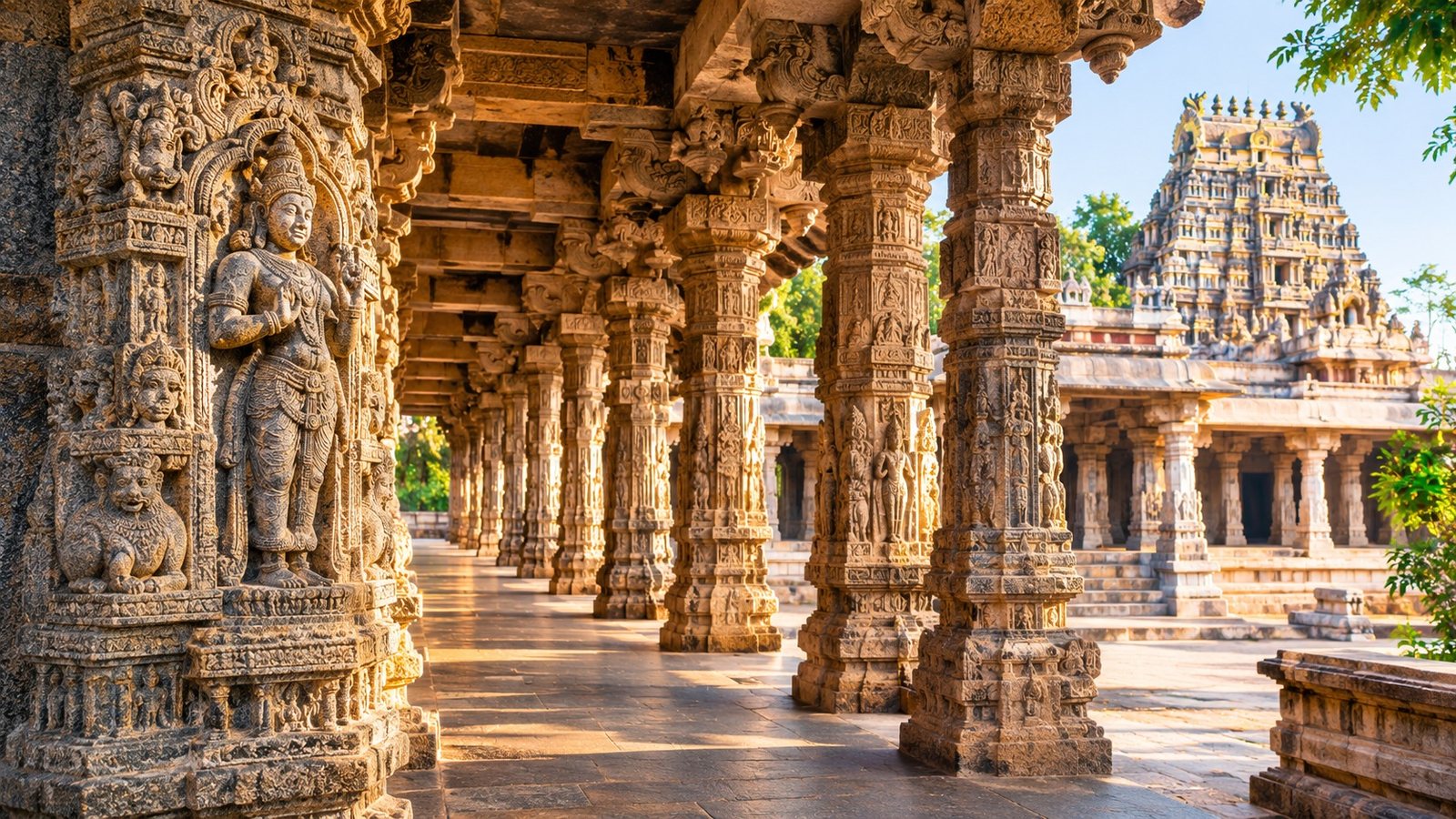
Stone architecture
Granite and other stone surfaces, carved pillars, relief work, Nandi and yali sculptures, ornamental details and architectural elements.
Assessment-led cleaning for compatible temple stonework, carved surfaces, sculptures and heritage structures.
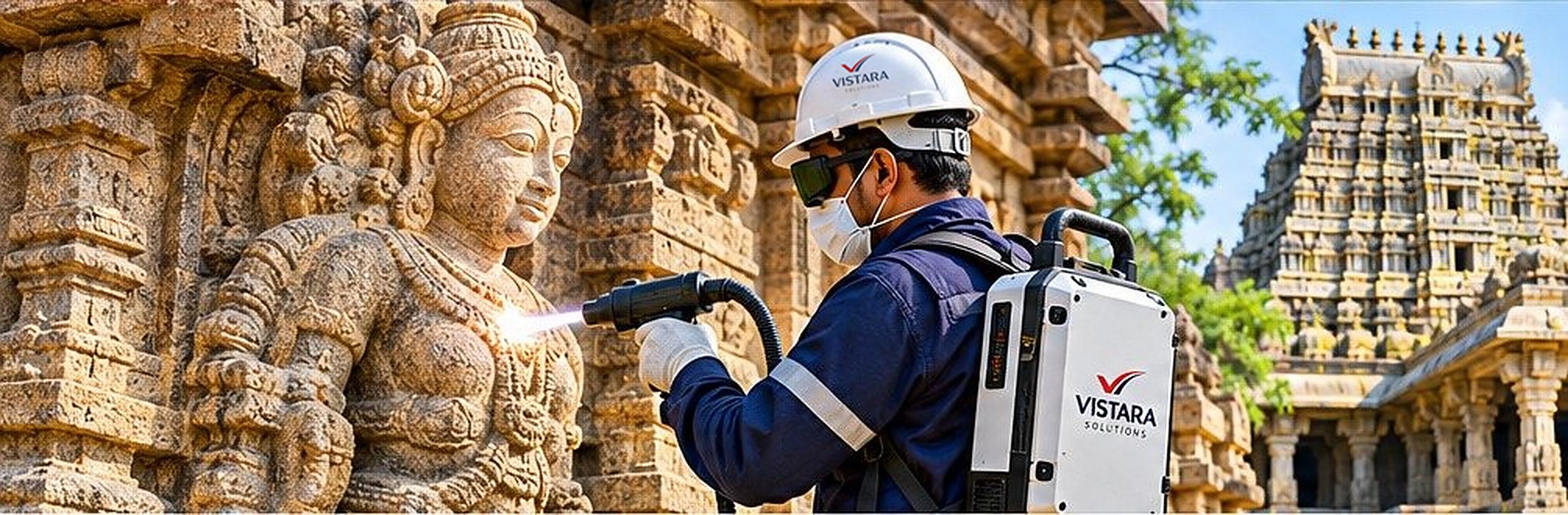
Our work is planned around the site, the surface and the conservation priorities—not a one-setting-fits-all cleaning method.
Granite and other stone surfaces, carved pillars, relief work, Nandi and yali sculptures, ornamental details and architectural elements.

Assessment of suitable brass, bronze, copper and other metal features such as bells, lamps, fittings, doors, railings and selected decorative elements. Patina, gilding and delicate finishes require particular care.
Approvals matter. Heritage work may need approval from the owner, a conservation architect or the relevant authority, such as the Archaeological Survey of India for protected monuments, the State archaeology department or the temple’s governing body. We help plan for this at the assessment stage.
We assess the stone, finish, age, condition and deposits before recommending a method. Laser cleaning works best where the deposit is darker or more absorbing than the stone beneath it. Conventional cleaning here means abrasive blasting, brushing, pressure water and chemical cleaners. The images are representative material references, not a substitute for on-site identification.
| Stone | Character | With laser cleaning | Conventional cleaning |
|---|---|---|---|
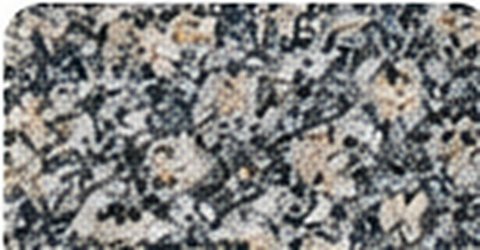 Granite | Dense, hard igneous stone of interlocking quartz, feldspar and mica grains. Used in pillars, steps, flooring and structural elements. | Generally robust. Can remove dark biological growth, soot and surface crusts. The mixed grains absorb energy differently, so settings are kept controlled; tone change has been reported with infrared lasers, so a test patch comes first. | Tolerates blasting and washing, but abrasive blasting dulls polish and tooling marks, pressure water can carry moisture into grain boundaries, and chemicals may stain. |
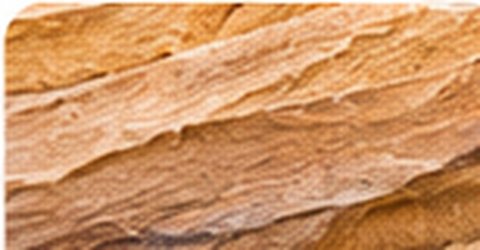 Sandstone | Sedimentary stone of cemented sand grains. Porous, often layered, with iron-oxide tints. Used for blocks, carved façades and ornamental work. | Can lift surface soiling and growth without wetting the stone. Weakly cemented grains may loosen and iron-rich tones can darken or shift under heat, so it suits sound surfaces only. | Blasting and brushing strip the weathered skin and fine detail; water and chemicals soak in and can move salts, leading to flaking. |
 Marble | Fine crystalline calcite. Pale, polished or honed, and easily marked. Used for decorative panels and sculptures. | A pale surface reflects much of the beam while darker soiling absorbs it, which gives a degree of self-limiting control on dark crusts. Yellowing or tone change has been reported with infrared lasers, and weathered, sugaring marble is fragile. | Soft and acid-sensitive: acids etch it, abrasives scratch the polish, and water can penetrate weathered surfaces. |
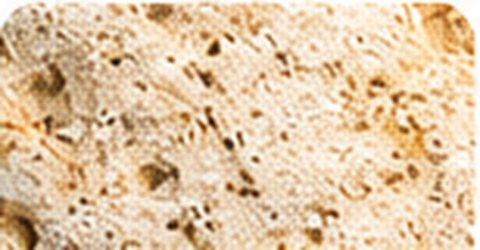 Limestone | Calcium-carbonate sedimentary stone with a fine to coarse porous texture. Used for carved features and traditional building stone. | Light colour helps selectivity on dark crusts and growth. Porosity and soluble salts make results vary, and tone change is possible, so crumbling or fossil-rich surfaces need conservation input. | Acidic cleaners dissolve it, abrasion removes the surface, and water draws salts and moisture into the pores. |
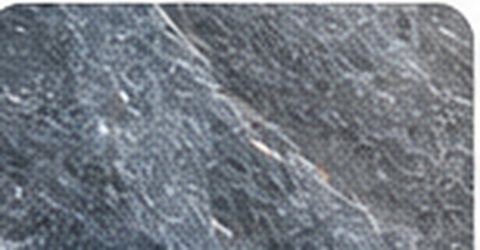 Soapstone | Very soft, talc-rich stone that scratches easily. Used for fine-detail carvings and sculptural elements. | Being non-contact, it avoids the scratching caused by touch. Dark stone absorbs energy strongly and heat can alter the surface, so only low-energy trials are used and some pieces may not be suitable. | Abrasives, brushes and firm rubbing mark or wear it quickly, which leaves only gentle methods. |
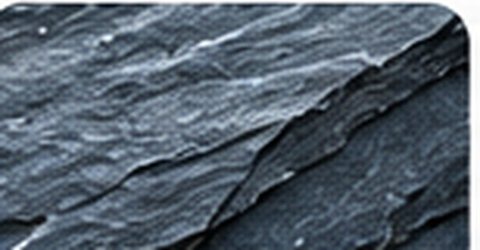 Slate | Dense, fine-grained, dark and layered stone that splits along its layers. Used for layered surfaces and selected architectural finishes. | A dark surface absorbs strongly, so low energy and careful trials are needed to avoid heating and flaking along the layers. Works best on light surface deposits over a sound stone. | Blasting and wire brushing roughen the surface and lift layers; water can enter between layers and chemicals may stain. |
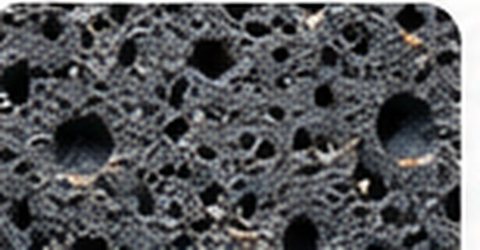 Basalt | Dark, dense, fine-grained volcanic stone. Used in structures and sculptural work. | Hard and durable, so it can tolerate removal of growth, soot and crusts. It absorbs strongly and iron-bearing minerals can change colour under heat, so energy is tuned carefully. | Withstands water washing, but blasting dulls dressed or carved surfaces and chemical cleaners can leave stains. |
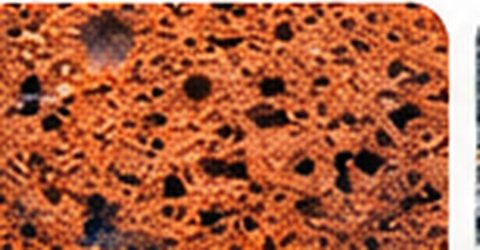 Laterite | Porous, iron-rich, red-brown stone that is often soft and crumbly. Used in regional architecture. | Iron-rich and strongly absorbing, with a friable surface that pulses can disturb or discolour. Only limited, low-energy cleaning is considered, and it may not be suitable. | Abrasion and brushing erode the soft surface quickly; water can wash out material and carry salts. |
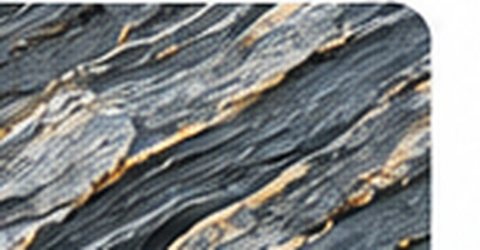 Schist | Foliated metamorphic stone rich in mica, with a layered, uneven structure. Found in selected architectural contexts. | Mica and other minerals absorb differently and the layers can lift, so results can be uneven. Trials on each area are needed. | Brushing and blasting lift flakes along the layers, and water can enter between them. |
Marble, limestone, soapstone, painted or polychrome surfaces and friable stone need particular caution. Some surfaces may not be suitable for laser treatment. A test patch and conservation input may be required before any work is approved.
We plan work around applicable laser-safety standards, manufacturer instructions, documented risk controls and the permissions required for the specific site and activity.
Laser classification, safety information, labels and protective features for laser equipment. Confirm the applicable edition and equipment documentation with the manufacturer.
Guidance for employers and users on laser risk assessment, workplace controls, designated safety roles, training and incident management.
Laser-radiation hazards and safety requirements for laser-processing machines, alongside the information supplied to users.
Risk-assessment and risk-reduction framework for machinery. The published 2010 edition is under revision; confirm the latest applicable edition before use.
ISO management-system certifications to consider, depending on business scope and customer requirements, and pursued through an accredited certification body:
For projects outside Karnataka: permissions are location-specific. Before mobilisation, identify and comply with the relevant State / UT authorities and local bodies at the project location. Depending on the site and activity, these may include the State / UT Factories and Industrial Safety Directorate, Fire & Emergency Services, State Pollution Control Board or Pollution Control Committee, electrical inspectorate / DISCOM, local municipal authority, and the property owner or custodian. Heritage sites may additionally require the Archaeological Survey of India, the respective State archaeology department, or the temple / monument governing body.
Tell us about the site, material and deposits to be removed. Our team will discuss a suitable cleaning approach and arrange a site assessment where required.